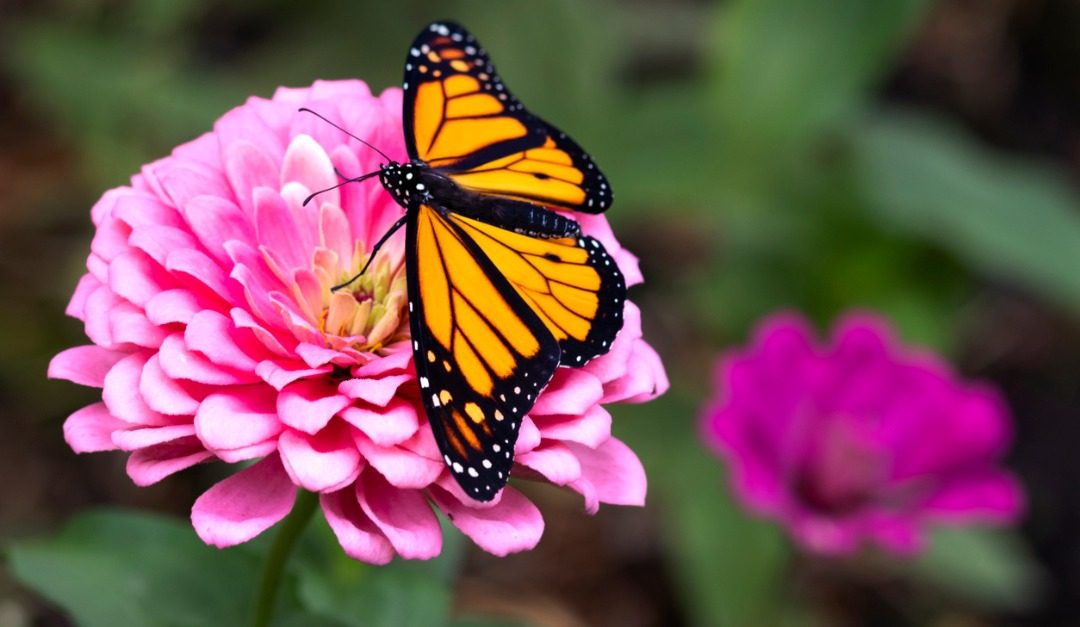


With its iconic orange and black markings, the monarch butterfly is one of the most recognizable species in North America. But these beautiful little critters are in trouble.
Their numbers are down 90% from just 20 years ago, according to the U.S. Fish and Wildlife Service, and they are on the verge of being placed on the Endangered Species list.
Furthermore, milkweed plants—the only source of food for the monarch caterpillar—are rapidly disappearing as land development and the widespread spraying of weed killers on the fields where they live are destroying their natural habitat.
But it’s not too late, scientists say, especially now as gardeners nationwide are preparing for spring growth. Industry experts suggest three ways gardeners can create a welcoming habitat and do their part in preserving the monarch butterfly.
- Grow Caterpillar Plants – Monarch caterpillars are fussy eaters. Adults lay eggs only on milkweed because that’s the only plant the caterpillars will eat. No milkweed, no monarchs—and there are over 100 species of milkweed available. Check your local garden shop for advice.
- Grow Nectar Plants – Adult monarchs get their energy by sipping nectar. Plants in the sunflower family, which includes asters, black-eyed Susans, calendula, coreopsis, purple coneflowers and zinnias, are particularly nectar-rich.
- Complete the Habitat – Butterflies need a landing pad to drink and they love mud puddles. Create a few shallow divots in bare soil and keep them moist, so butterflies can sip water and get much-needed minerals from the soil. Be sure to have trees and shrubs in your yard where butterflies can roost at night. Also, butterflies can’t fly when they’re cold, so place large, flat rocks in locations that receive morning sun to give them a place to warm up.