


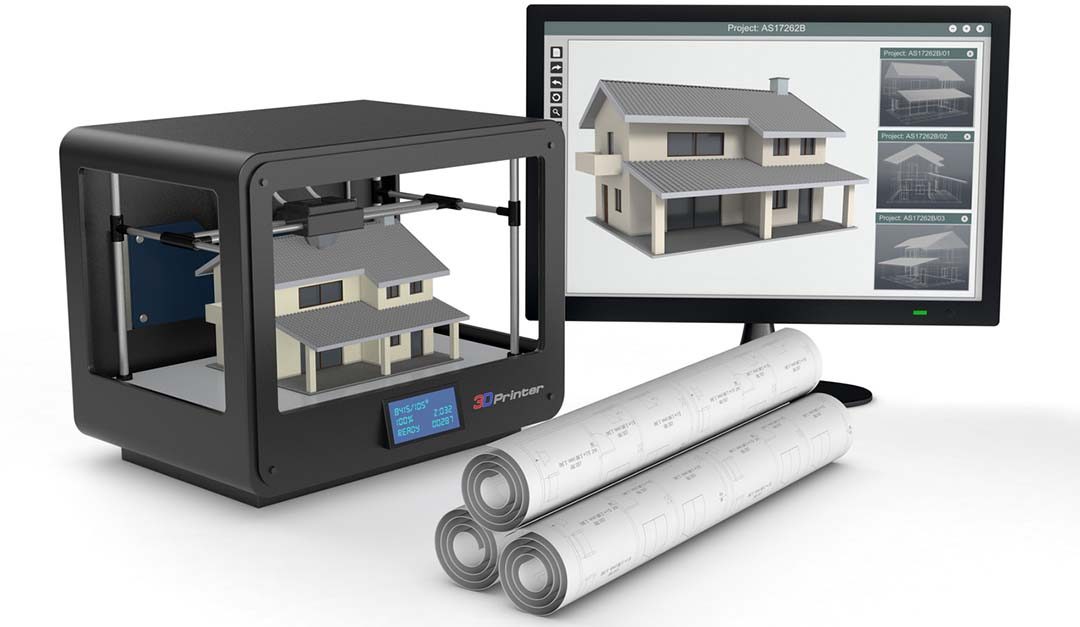


What would you say if someone offered you the chance to live in a home that was not traditionally built, but printed?
If you answered, “possibly,” you would be among two-thirds of American consumers who are open to the relatively new technology of 3D printing—something that builders claim will allow cheaper, faster-built dwellings that could become a significant part of the market in the not-so-distant future.
The data comes from a HarrisX survey released last week, commissioned by realtor.com®, that also found millennials and recent homebuyers were especially interested in the new technology, which uses 3D printers and automated processes to create structures from the ground up using concrete, plastic or other building materials.
“While the technology is still somewhat nascent, our survey data shows that consumers are very interested in 3D printed homes,” said George Ratiu, senior economist at realtor.com®, in a statement. “While there have only been a small number of 3D printed homes sold to date, as the technology continues to advance, we could see it add more affordable homes to the housing market.”
Additional insights:
While 75% of millennials would consider living in a 3D printed home, and consumers expressed interest in the potential benefits provided by the technology—affordability, energy efficiency and customization—many questions remain.
More than a third (36%) of respondents said they wanted to wait and see how the technology panned out before investing. Nearly a quarter (22%) worried that the 3D printed homes would not last as long as a conventional home, while 18% did not want to live in a house that was identical to their neighbors.
But despite some of these concerns, Raitu said current market conditions have demonstrated that affordable homes that can be built quickly need to be part of the conversation going forward.
“Anything we can do to reduce the cost of new construction and increase the number of available homes, especially at an affordable price point, will help to restore balance in this strong seller’s market,” he said.
The survey also found that even though 3D printing remains a novel technology, with only a handful of niche builders behind them, 42% of survey takers were at least aware of the concept. That number jumped to 63% when considering only recent homebuyers.
“For the rising generations of digital natives, new building technology may provide a sustainable bridge toward homeownership,” said Ratiu.
Jesse Williams is RISMedia’s associate online editor. Email him your real estate news ideas to jwilliams@rismedia.com.


I think it is a great way and opportunity for so many and we should go forward with the 3D Printer housing. As to the 3D Printer house not lasting as long, I would think the opposite. Concrete would last longer that wood, drywall etc and have less maintenance/upkeep. Also, we would be saving our forest, trees. I would think a concrete home would be easier to heat and cool, saving on energy bills. 3D housing tracks would not be any different that our present tracks. 3D printer can make changes to make the housing look different from each other.
I think this is a fabulous great new product and something we desperately need. Lower cost, faster way to provide a product that’s in great demand. More people could afford to have a home that stuck with apartment living. Who wouldn’t want this for their family to have a home of their own. I just hope it can start happening soon :)) the sooner the better…… Thank you.
How does it work?