Editor’s Note: Peculiar Properties is a new series highlighting just that—peculiar properties, from former military assets to repurposed funeral homes and anything in between. Contact our editor Clarissa Garza at cgarza@rismedia.com if you have a property peculiar enough to be featured.
In the small town of Chester, Connecticut, one home easily stands apart from the clapboard colonials and antique farmhouses that line the streets. Locals simply call it the “Recycle House.”
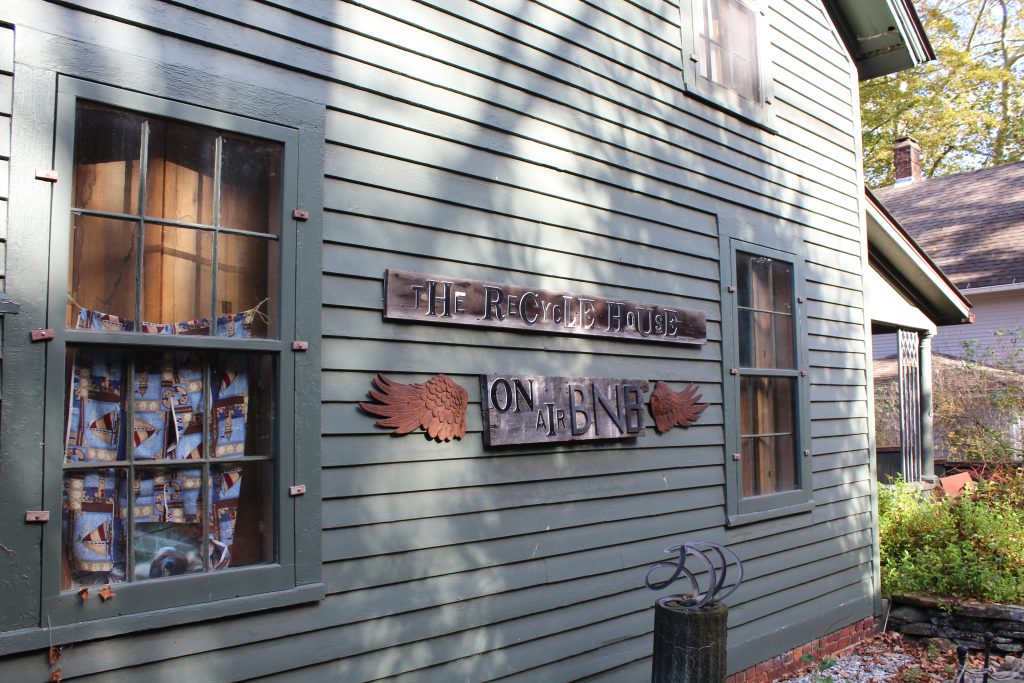
“I had all of these letters in a box that didn’t match, but I thought to myself ‘Why do they need to match?’ says Dr. Senay about the sign affixed to The Recycle House.
“It’s kind of a staple here,” said listing agent Amy Graham of William Pitt Sotheby’s International Realty. “Pretty much everybody knows about it. It’s currently an Airbnb, and it does really well. Out of towners love it for its proximity to the village—and locals know it…It’s a Chester thing.”
Built almost entirely from salvaged and repurposed materials by Dr. Kim Senay, the property has become something of a community landmark. Senay, who’s been a dentist in Chester for over 50 years, lives across the street from the Recycle House and spent more than a decade turning the house into what it is today—a living collage of the area’s past and quiet statement against waste.
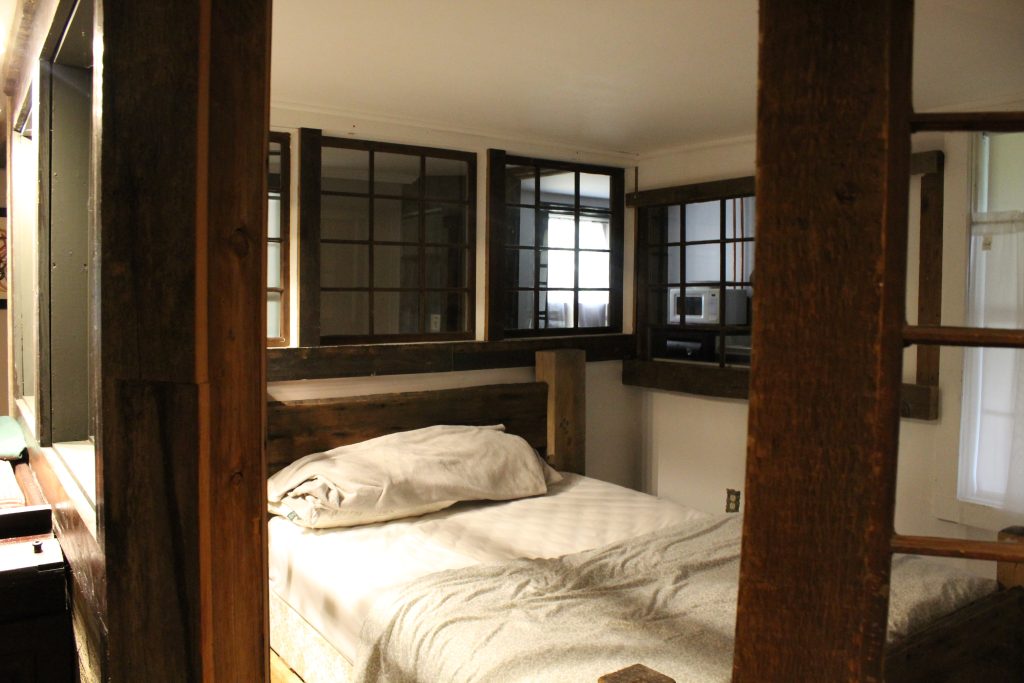
Without these windows, Dr. Senay says, “it would just be hallways down here.” They “open up the space” and make everything less enclosed.
He didn’t set out to build a local icon when he bought the property, though. Initially, he purchased it simply to avoid parking overflow from the previous owner’s visitors. “This was just a funky hobby,” he tells RISMedia.
“I didn’t rush at it; it took me 12 years,” Senay says. “As I’d find stuff, I’d put it there, and the name came because I was getting a lot of grief from one of the neighbors because there were piles of stuff in the parking area…So one day, I said, ‘Oh, I’ll name it The Recycle House,’ so that solved that problem.”
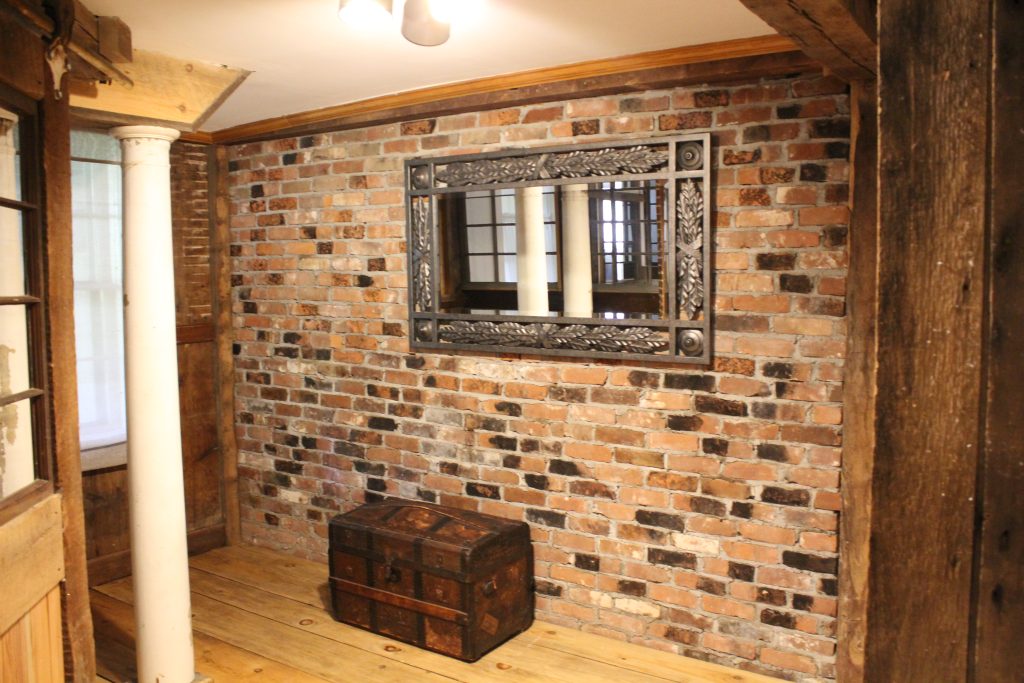
All this brick is from the chimney of the house; Dr. Senay laid it himself. “It’s really easy to make it look perfect…The hardest part was making it look like it had been there forever.”
Certainly one of the more unique homes Graham has listed, the Recycle House has captured the interest of a wide range of buyers—some looking to turn it into a single-family home and others eyeing it as an ongoing rental investment.
Some have gravitated toward the sustainability aspect of the home.
“Dr. Senay, his whole philosophy was that he couldn’t stand when people would just throw things away,” shares Graham. “He thought, ‘Well, if they’re going to throw them away, I’m going to repurpose them.’”
In Senay’s own words: “Everyone has the right to throw stuff away but that doesn’t give them the right to make it trash.”
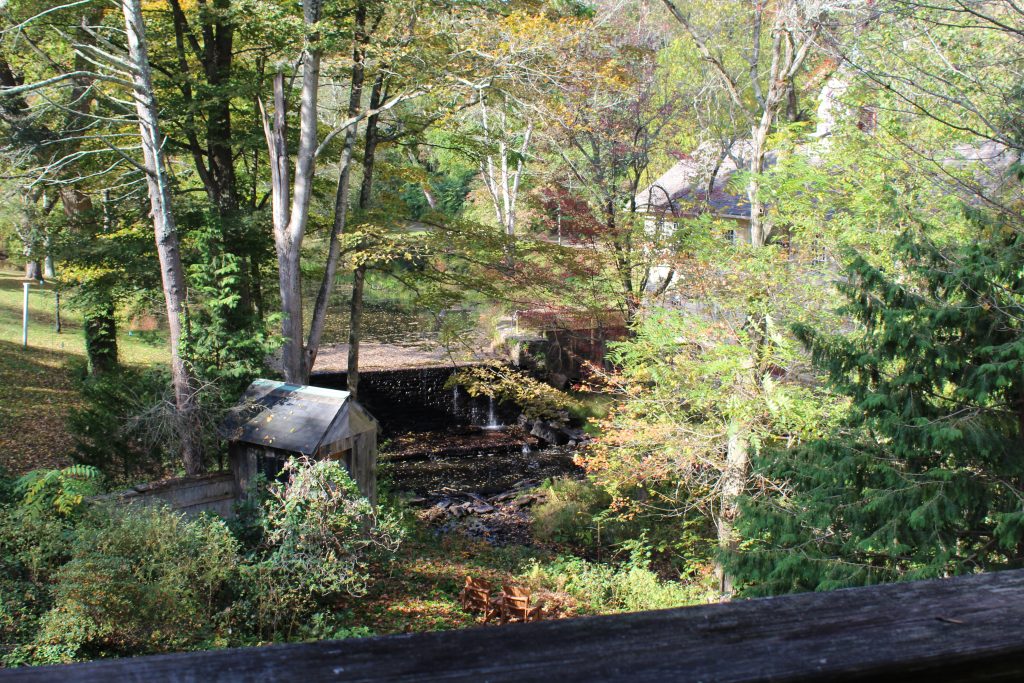
View from a bedroom’s balcony.
Given the home’s uniqueness, Graham had a lot of factors to consider when it came to comps.
“It’s a multifamily right in the heart of the village, and it is multi-use. Somebody could live in there full-time if they wanted; it could be converted to a single-family home, or people could run it specifically as a business,” she says.
Step inside, the multifamily home—made up of two separate units: a one-bed/two-bath unit upstairs and a one-bed/one-bath unit downstairs—feels airy and bright, a surprise to first-time visitors expecting a dark, wood-heavy cabin, shares Graham.
“You cross through a covered bridge to get into the home…I think sometimes people don’t know what to expect if they haven’t seen the pictures,” she says. “It really opens up…it’s very airy; there’s a ton of floor-to-ceiling windows…It’s a quaint, rustic-artistic feel.”
Every square foot carries a story. Senay scavenged many of the materials from local buildings, using boards from old schoolhouses—that still have remnants of children’s engravings—booths from local diners, and utilizing every scrap he’s come across.
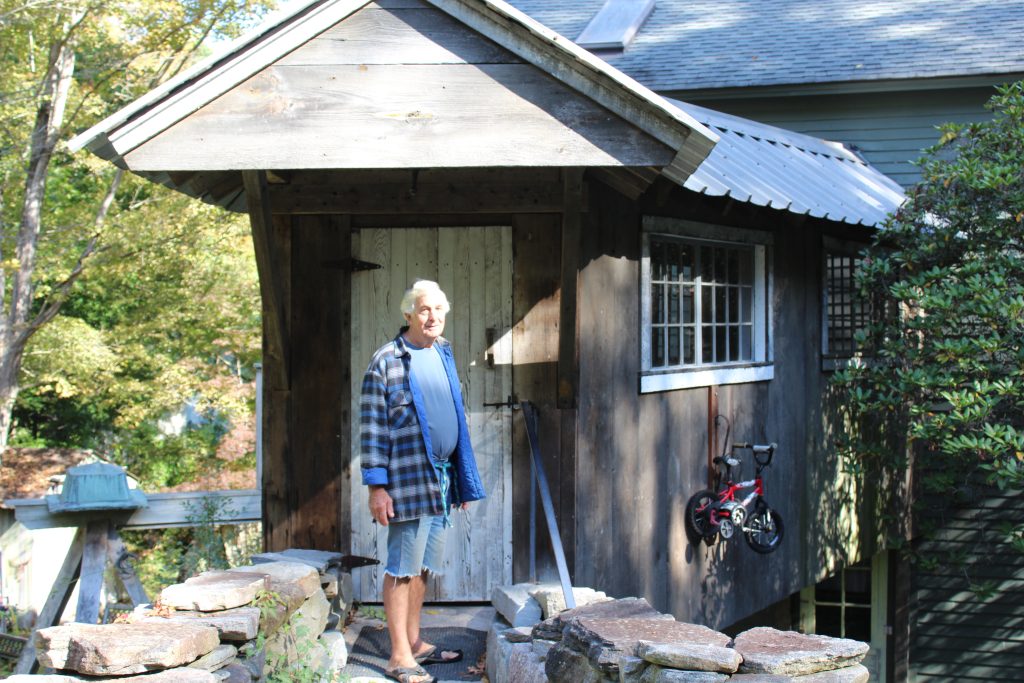
“There’s always something to build, and you can always find things to build with,” says Dr. Kim Senay.
The concept of a “Recycle House” isn’t new, as there are others around the country, but Senay’s is unique.
“Most of them, from what I’ve seen, they end up buying a lot of the stuff. I didn’t buy anything,” Senay says. “I acquired almost everything—dumpsters, people dropping stuff off on the doorstep, literally everything in the home was recycled.”
For the most part, Senay waits for pieces to tell him where they belong. At least that’s how a children’s bike now affixed to the bridge found its home.
“The cleaning service man was getting divorced, and he’d given me a whole bunch of stuff, and one of the things was a little kid’s bicycle with some rust on it. And I always put stuff on the curb in front of the house with a ‘Free’ sign and almost everything goes…This had been there for three weeks,” Senay explains. “I pulled up to the driveway, and the bike says to me, ‘Can I stay here?’”
Still at The Recycle House today, the bike is just one of many objects given a second life and a story to tell.
Given the business component and the established rental history, Graham had to account for that and make sure all of that information was made available to potential buyers.
“We kind of looked and added, you know, just a little bit into the pricing, because it did have such an established rental income already,” Graham said. “It’s not like somebody coming in would have to completely start the rental potential from scratch…Even though the business doesn’t come along with it, it is still a very popular rental.”
-

One of the home's two propane firepits.
-

Bookcase leading into balcony.
-

Dr. Senay used glass to avoid obstructing views.
-

Repurposed wood from a schoolhouse, still bearing a child's initials.
-

This is an original tub from the 1800s.
-

"You can always make something with a piano," Dr. Senay says about a bench made with restaurant cushions and a piano as the frame.
-

These columns in the downstairs half of the house actually hold the pipes.
-

This was the door from a house Dr. Senay tore down and used materials from.
-

Repurposed from the inside of a piano.