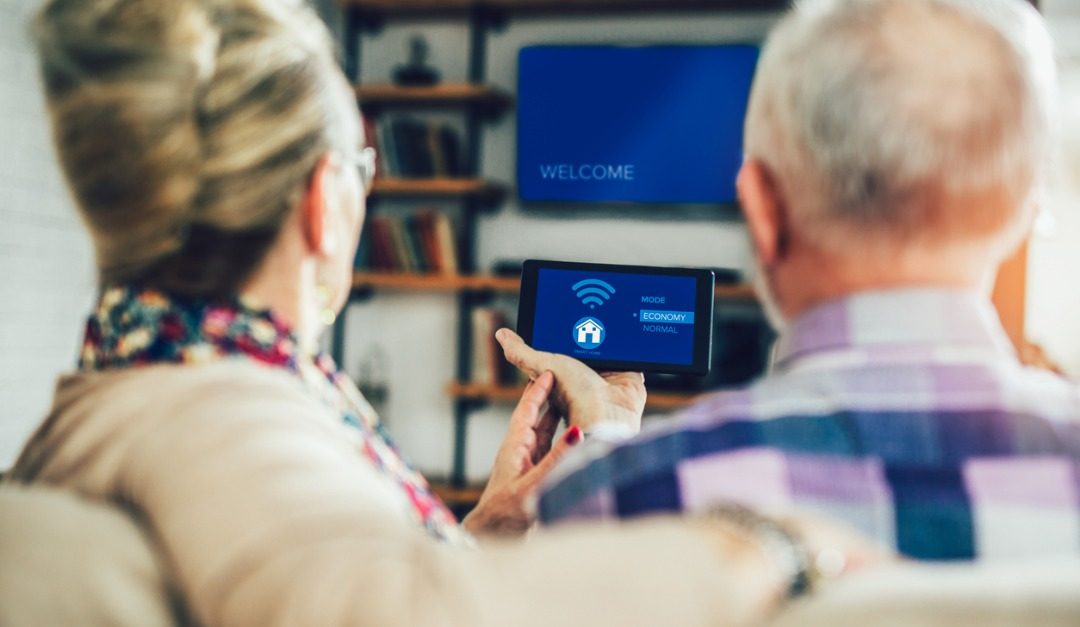


For older adults and people with disabilities, daily life can be filled with challenges. Smart home technology includes several types of devices that can be controlled via a smartphone or laptop to make life safer and more convenient. Consider installing one or more of these types of devices so your relatives can enjoy more convenience and security .
Security
For many seniors and people with disabilities, getting to the door when someone comes to visit can be a challenge. A doorbell with a camera and intercom can let a resident see who’s at the door and have a conversation. Technology can convert spoken words to written language so a person who is hearing impaired can carry on a conversation with an individual who doesn’t know sign language.
Technology can allow seniors and people with disabilities to lock and unlock a door to let family, friends or first responders in when it’s not possible to get to the door. Some apps make it possible for someone who is away from home to check whether doors are locked, and to lock and unlock them as necessary.
Cameras can also be used to monitor activities inside a senior citizen’s or disabled individual’s home, allowing relatives to see what’s going on and respond if the person gets injured or seems to be in some other form of trouble.
Health
Some companies offer technology that uses sensors to monitor an individual’s daily activities. If the person doesn’t eat regularly or take medication at the right times, for instance, a family member or friend can be notified.
A smart refrigerator with a camera makes it possible to see what’s in the fridge without opening it. Technology can also be used to create a grocery list, send it to a store and schedule home delivery.
A smart thermostat can regulate the temperature in a home. It can be automatically adjusted when people arrive and leave, or the thermostat can follow a predetermined schedule.
Limited Vision and Mobility
Using a remote control to find a program on television can be challenging for people who have arthritis or other conditions that affect their vision, motor skills or coordination. Voice-enabled technology can help.
A person can simply say the name of a program or channel, and the software can find it. Voice-enabled technology can also answer questions, order products online, initiate phone calls and perform other functions. Smart home devices that track and respond to head movements can provide these types of services for individuals who are unable to speak.
For people with limited mobility, turning light switches on and off or raising and lowering blinds can be difficult. Smart home technology can be programmed to perform those tasks automatically at predetermined times. Motion detectors can also make adjustments when a person enters or leaves a room.